I Give Myself Permission to …

I’ve been participating in a Chronic Pain and Illness photo project.  I participated in the same group last year, you can see those photos on these posts: Chronic Pain/Illness Photo Project, Chronic Pain/Illness Photo Project 2015 Week 2 , and Chronic Pain/Illness Photo Project 2015 Week 3.  This year I’m sharing a few photos here and there, not the whole project.

I’d love to hear your take on this topic.  What do you give yourself permission to???

Today – I give myself permission to Cry.

My x-rays showed more degeneration in my neck. C5-C6
The pain is intense. It just hit me that this is only going to get worse. The pain will always be there.

My father is in the hospital. I can’t go. I can’t ever go.

Today I give myself permission to cry.

(photo taken today, I manipulated it with photoshop, but the tear is real.)

crying

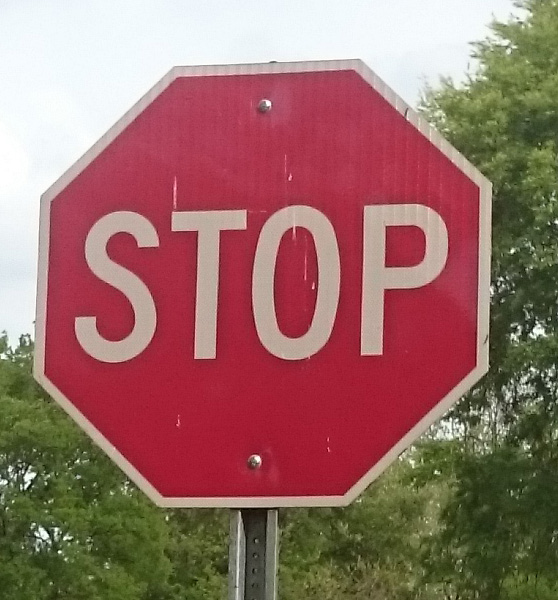
STOP

This photo symbolizes what I need to do…
STOP.
Stop and listen to what my body says.
Stop and look, really look at everything.
Stop and smell, and see, and taste…
Stop and breathe.
Remember to STOP and be mindful.

stop sign

this was part of the Chronic Pain and Illness Photo Project 2016

The theme for today was Mindfulness.

Grief and Acceptance

When people think of grief they often think of death, they don’t think about grieving over other significant losses.  Those of us who have had major losses due to chronic illness know all too well that we grieve those losses.

The five stages of normal grief that were first proposed by Elisabeth Kübler-Ross in her 1969 book “On Death and Dying” are: Denial, Bargaining, Depression, Anger, and Acceptance.  Kübler-Ross describes these stages as being progressive, you needed to resolve one stage before moving on to the next.  This is no longer thought to be true.  It is accepted that most people who have loss go through states of grief but it is not linear nor is it finite.

The 

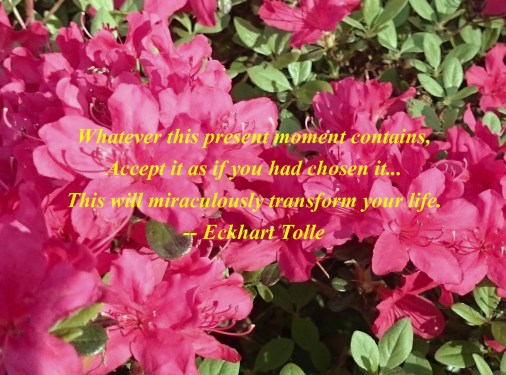
Eckhart Tolle Quote

Often people think of acceptance as being okay with what happened.  That is not the case. Most people never feel completely okay about a great loss.  Acceptance is about accepting a new reality. This is the way life is now, it is the new norm, our lives have been forever changed and we must adjust accordingly.  At first finding acceptance could be just having more good days than bad.  We can never replace what has been lost.  However, we must listen to our needs; we change, we evolve, we accept.

Once you have reached a good level of acceptance this doesn’t mean you can’t feel sad again.  We are constantly reminded of our losses, when these reminders arise we can find ourselves feeling grief again.  It’s at these times that our acceptance is most helpful.  We may feel our losses, but we know there is life after.

I accepted my losses long ago, however, feelings of grief do come flooding back from time to time, especially if I lose something else.  When one is chronically ill, we often find we lose more things as time goes on, even when those losses have nothing to do with our illness it can bring back all the emotions from our previous losses.

For example, in the last 2 years I’ve had a number of new losses.  We had to move because my husband found a job in a new city.  This move caused me to lose my home, my neighbors, more friends, and my doctors.  Then a new diagnosis that causes more pain and loss of range of motion was another huge loss.  The losses just seemed to keep adding up.  I have more grief that I have to work through.  Simply because we dealt with our previous losses does not mean our new losses hurt less, or that we don’t need to grieve.  However, it does mean that we now know that acceptance will help us deal with our losses, and give us the ability to move on.

I should point out here that prolonged intense grief can produce a physical or Prolonged Grief Disorder.  “Prolonged grief disorder require bereaved individuals to have severe levels of yearning, and five of the following nine symptoms for ≥6 months post-loss: disbelief and bitterness over the loss, confusion about one’s identity, an inability to trust others, numbness … and feeling that life is empty and meaningless since the loss, difficulty accepting the loss and moving on with life, and feeling stunned by the loss.” (Holly G. Prigerson, Paul K. Maciejewski – 
 Based on numerous findings of maladaptive effects of prolonged grief, diagnostic criteria for Prolonged Grief Disorder have been proposed for inclusion in the DSM-5 and ICD-11. 
There is a great article at Psych Central on the 5 Stages of Loss and Grief, here you can also find a quiz to help you decide if you are suffering from complicated grief.
If you feel you are suffering from complicated grief I urge you to seek professional help.  It can get better.

#WorldBipolarDay 2016

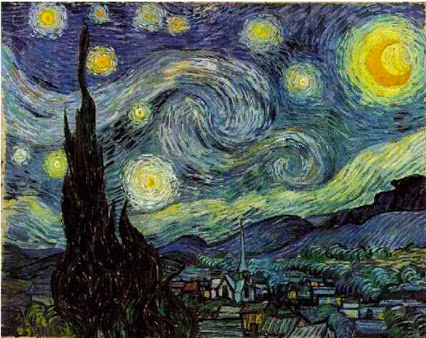
#WorldBipolarDay is celebrated on Vincent VanGogh’s Birthday, who is believed to have had #bipolar disorder.

stary night

This year’s #WorldBipolarDay “theme is “More Than A Diagnosis”, as we want to show the public that individuals who live with bipolar disorder are more than their diagnosis; they are capable of living full, successful lives, despite and in spite of their diagnosis.” – See more at: http://ibpf.org/wbdresources#sthash.TlZ5dveb.dpuf

I have bipolar disorder, formerly known as Manic Depression.  It is characterized by periods of extreme highs and lows that interfere with some or all aspects of a persons life.

According to the National Institute of Mental Health there are an estimated 5.7 million people 18 and over and and 750,000 children in the US affected by this disorder.

The lows include extreme depression.  Sadness most of the time, changes in sleep paterns, appetite and possibly weight. There is a feeling of worthlessness and guilt and an inability to find enjoyment.  A person often has thoughts of death or suicide.

The highs, or manic part of the cycle, include increased levels of self esteem and grandiosity.  The person seeks out pleasurable and risk taking experiences often to the point of danger, including  sexual prowess,  drug and alcohol abuse and shopping sprees.  Mania can also include sudden outburst of violent and unpredictable behavior.

Bipolar Disorder can be treated most often with mood stabilization medications and psychotherapy.

Like all illnesses following a wellness routine is essential.  Stay mindful of your moment to moment experience and recognize the signs of mood swings early.  Be sure to get enough rest, eat well, exercise, take your medications as prescribed, and develop a strong support network.  Often these steps are very hard to do, but it is essential that we take care of ourselves the best we can.

I have never hidden my diagnosis.  I know there are many people who feel they can’t share their diagnosis due to prejudice against the mentally ill.  We should all fight to stop the stigma surrounding Mental Illness.

Always remember we are #MoreThanADiagnosis.  I am a friend, wife, artist, blogger and more.  I am creative, intelligent, loving, compassionate and much more.

The people at the International Bipolar Association “…encourage people who live with bipolar disorder to remember that they can accomplish great things even though they have been diagnosed with bipolar disorder, and to remind them that there is a very supportive community out there for them to reach out to.”

#WorldBipolarDay, all day.

Happy Birthday Vincent!


I didn’t expect…

Sometimes you wake up and think it’s going to be a great day, and it isn’t.  Sunday was that kind of day for me.

First thing I cuddled with hubby when I woke and had a silly dog jumping on us all excited and playing, so waking up was loving and fun.  Soon that changed.

I’m not sure what the first thing was but the day became full of petty little arguments and bad feelings.  We would disagree, apologize then something else would happen and we’d disagree again, or we were just very short with each other.  I know I spent most of the day in a huff, or tears.

I tried to talk about what was discussed in my last therapy session….loss….and I got very emotional (read sobbing like a baby).  He did not react like I wanted.  Notice what I said, I felt he was in the wrong because he didn’t behave like I wanted, like I expected him to.  So who’s at fault there?  I think that would be me.  We aren’t hurt by people, we are hurt by our expectations of people.  And I think that is how the rest of day kind of played out.  We didn’t act the way the other person wanted, or expected and that caused bad feelings.
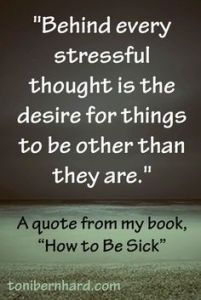
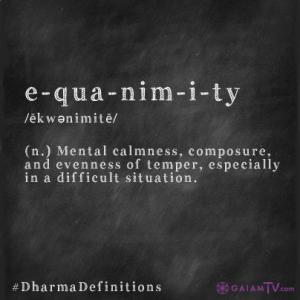
equanimity 6

This can happen with anyone.  If I admit it, that is what happened when I felt abandoned by my friends when I got sick.  I was so hurt, so angry, they didn’t react the way I expected.  This caused all my unhappiness.  That is why I was so hurt.  My friends did not react the way I expected.  What did I expect?  Visits, talks, help, I expected this and more.  People aren’t always going to do what we expect.  It doesn’t make them bad people.  We don’t know the reasons.  Perhaps my illness brought back bad memories, or fear over their own health,   Some people simply don’t know how to be a friend during these times or they don’t really want to be.  We have to accept this.  More than anything we need to understand that the hurt comes from our expectations, not from the people.  Does that make it hurt less?  Sometimes.  When a person I’ve loved for years and years disappeared after I got sick, it hurt.  It hurts more when I know I was there for the person when they needed me.  However, their need ended, there is no end in sight for my needs.  I will always be different than I used to be.  That’s a hard thing for any relationship to endure.  We loose relationships for a number of reasons, we fight, we move, we change jobs….  Not all relationships stay in our lives.  Things change.  We can look at friends we’ve lost since our illness took hold and think, “they showed their true colors”, “they weren’t real friends”… The truth is, they aren’t what we expected them to be and it is that expectation that causes us pain.

I can hear some of you saying, “They abandoned me, shouldn’t I be hurt?”  I’m not saying it won’t hurt, what I’m saying is, we often bring more hurt upon ourselves than is needed.  We have to let it go.  Did the fact that they are no longer in our lives negate all the good times we had?  I hope not.  It changes how we will interact with them in the future.  We’ve changed, they have changed, the relationship changed.  That change may be that it is over.  It may be that the relationship becomes something different from what it was before, we have to decide if it is worth it.  We can have bad feelings about this, but it is our decision whether to hold on to these feelings or let them go.  I try hard to let them go, to find equanimity.  Do I always succeed?  NO.  Sometimes the hurt comes back to the surface, I think that’s a part of grief.  But now I can sit back and think, why is this bothering me so much?  I always come back to the same thing, I want it to be different than it is.  My wants are causing me harm.

Not everyone has to understand what I’m going through, and not everyone has to be there for me.  It is a great feat to be able to accept a person for how they are, even when they let you down.  I’ve decided to let go of the past relationships that didn’t work.  I work on relationships with people who understand my limitations and are willing to work on our relationship the way it is now.  I don’t have many friends from before.  I have made a number of friends on-line since I’ve gotten sick, and lost my hearing.  Due to my limitations, I haven’t been able to make friends outside of the house, maybe that will happen in the future, but I’m okay with that.  I will continue to nurture the relationships I have and focus on these things.

When I got sick most of my friends were starting a family.  I had many friends who were pregnant at the same time the year before I got really sick.  Keeping up with me kind of went by the wayside.  They had a new life, one that would have been new if I were sick or not.  Our friendships would have changed.  Would they have survived if I hadn’t gotten sick?  Probably, at least for longer than they did.  Things changed.  I could no longer nurture the relationships the way I had before, my friends couldn’t find a way to bend to my new limitations.  Is there hard feelings?  I’d lie if I said they aren’t ever there, but for the most part, I’ve found peace with this.  Realizing that my pain comes from me, makes it easier to have equanimity in this situation.

Something else I noticed, when I tried to attend a few gatherings with my friends after I’d been sick for a while, I realized, I had nothing to say.  I used to be a social butterfly, always being able to have conversations with anyone.  After getting sick my world shrank, I rarely go out other than go to the doctors.  My friends still worked, ran around with their kids, and had rich social lives; my life revolves around my health.  That doesn’t give us much to talk about.  I wanted to hear all about their lives, but I had nothing to contribute to the conversations.  I was uncomfortable, and I made others uncomfortable.  Conversations were forced.  We had changed.  The fact that our friendships didn’t survive doesn’t mean either of us are bad people, we grew apart, as many people do.  When you become chronically ill to the point that your life changes so dramatically, it forces all of your relationships to change in a very short period of time.  Suddenly I didn’t have hardly anything in common with my core group of friends.  Normally if relationships change it takes time,  If you lose a relationship it doesn’t normally come in a mass exodus.  That is exactly what happens to many who are chronically ill.  We don’t see this as a natural progression in a relationship, we see this as abandonment.  It hurts much more than when you lose one friend because of something, you are suddenly losing many friends.  When I realized things change no matter what, and I will never know just how they would have changed without me getting sick, it helps me accept these things.

I realize now how much relationships change no matter what, and how much we need to nurture a relationship to keep it alive.  I hope this helps me to be a better friend and find compassion for others and myself when dealing with changing relationships.

 

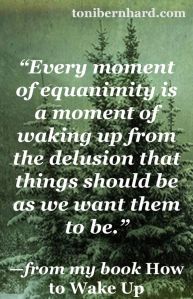
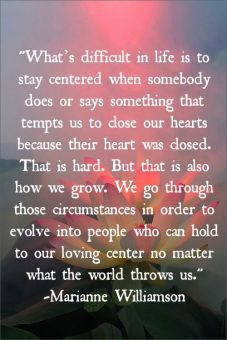
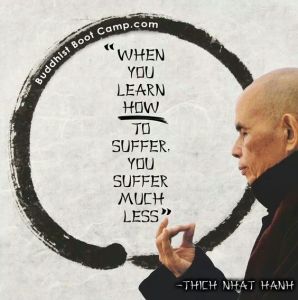
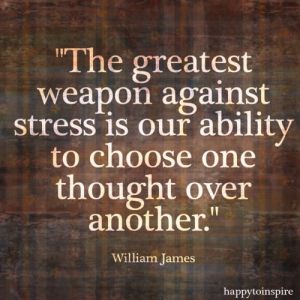
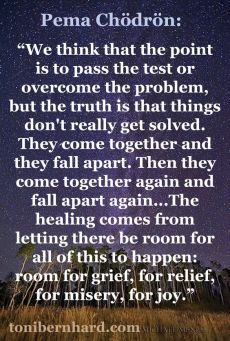
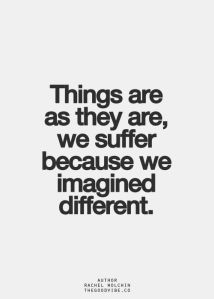
Equanimity Quotes

I am in constant search for equanimity.

The quotes on this page remind me what equanimity means and how to cultivate it.

equanimity

toni bernhard equanimity quote

equanimity quote 2tonibernhard.comquote

equanimity quote 3 equanimity quote 4 equanimity quote 5 equanimity quote expect


Finding equanimity when chronically ill can be a challenge.

How do you find an inner calm while being chronically ill?

Out Of The Darkness

abstract 2 (1)
In the Swirl, by w. holcombe

I have Bipolar I, that means that I have the highs (mania) and the lows (depression) that go with Bipolar.  I’ve been mostly stable for the past 20 years.  However, for over 2 years I’ve been fighting depression pretty hard.  I’ve been on different medications, but I was not feeling better.  I kept thinking it was everything that was happening in my life.  Having vertigo almost every day, losing more of my independence, moving so hubby could have a job after being laid off for over a year, having to have my hip replaced due to Avascular Necrosis, well you get the picture.

I saw a new psychiatrist last month, he took me off of one antidepressant that obviously wasn’t working and put me on another medication.  It is like a veil lifted from over me, the darkness has given way to light.  I no longer cry every day.  I’m feeling hopeful. I feel like me.  OK, now I’m going to cry, from from relief and happiness.

My new psychiatrist told me something interesting, he said that often later in life a person with Bipolar I doesn’t have as many highs they have more depression. (I’m 52, I’ve shown signs of Bipolar since I was a child.)  So he so he decided to put me on a drug that is for Bipolar Depression.  The drug is is “a psychiatric medication that belongs to the class of drugs called atypical antipsychotics. It works by helping to restore the balance of certain natural substances in the brain.”  It has been a month and I’m amazed at how much better I feel.  Even when things have happened that would have upset me, I’ve handled it with ease.  How cool is that?

I’m so very grateful that someone and something was able to help.

I haven’t mentioned the names of any of the drugs because I don’t want anyone to think I’m advertising for it.  If you want to know, I’ll be happy to tell you in a comment.

today is a good day.

one moment at a time.

Can Cannabidol help the NFL?

I haven’t mentioned medical marijuana on my blog, mainly because it isn’t legal in my state.  However, cannabidiol (known as CBD) is legal in the US. (at least everywhere I know of)

The following quotes are from Win The Bright Lights Fade web page on Realm of Caring’s web site.

“CW Botanicals, a pioneer in hemp oil therapy, originally developed Charlotte’s Web (a hemp-based oil rich in cannabidiol, a non-euphoric cannabinoid) as a natural progenitor for overall brain health. Containing no more THC (the chemical that causes the psychotropic “high”) than the average hemp granola bar, their hemp oil delivers precise levels of cannabinoids, naturally occurring compounds that interact with neuroreceptors in the brain and the endocannabinoid system to regulate processes such as appetite, pain sensation, mood, and memory.”

“A recent study conducted by the Department of Veterans Affairs and Boston University shows 96% of former NFL players suffer from the neurodegenerative disease known as chronic traumatic encephalopathy (CTE). CTE is widely believed to stem from repetitive trauma to the head and can lead to conditions such as memory loss, depression and dementia.”  (this was brought to the public’s attention with the movie Concussion.)

“The Realm of Caring Foundation (RoC) is launching When the Bright Lights Fade, a campaign to raise funds for a series of studies exploring how the use of cannabinoids, specifically cannabidiol (known as CBD), can help treat and prevent the onset of symptoms associated with CTE and traumatic brain injury.”

About me and cannibus….I just ordered High CBD oil to use for pain control.  It takes a little while to get the full effect as soon as I know if it is going to work, I’ll post an update.  I have degenerative arthritis in my neck.  I can’t take traditional pain medications and most have undesirable side effects for almost everyone I know.  I am hoping this alternative will help with the pain and not cause me any ill effects.

Today I received a sample of The Fay Farm’s CBD Warming Muscle Rub.  I will write a review of this soon.  I’ve used it once and was surprised at how much it helped with my pain.  I want to give it more time before posting my review.

For the past year I’ve been using cannibus to control the nausea and vomiting during a vertigo attack.  I use it when I first feel the vertigo start and it has helped greatly.  Before using this I was taken to the ER a number of times because the vomiting was so severe I would become dehydrated and traditional antiemitics do not work for me during this time.  I feel this also helps to slow or stop a vertigo attack before it gets bad.  (yes, my doctors know I use this, I’ve had 2 say if it was legal in this state they would prescribe it, that’s why I started using it.)  I have do not use enough to get “high”, if I did I’m afraid I would have a vertigo attack because of it, therefore it does not help me with pain.  I am hoping as I start taking the cannabidiol it will help with the nausea and reducing my vertigo atacks all the time so I don’t have to use cannibus at all.  Again, something I will update on in the future.

Update On My treatment

dandilion flower

My treatment for vertigo as laid out by the doctor at John Hopkins was to continue working with my migraine doctor to get my migraines and migraine associated vertigo (MAV) under control, go to vestibular rehabilitation therapy, and to have gentimiacin injections (a medication intended to purposefully damage the inner ear to stop dizzy spells in Meniere’s disease).

As you might recall I wasn’t thrilled with the doctor I saw in our city, and was not going to allow him to do the gentimiacin injections.  However, he did send me to vestibular rehab.

I’m still seeing my migraine doctor (a neurologist who specializes in headache pain), we are working on getting the migraines under control.  I can’t say I’m having fewer migraines but they do seem to be less intense.  It’s hard for me to tell if my vertigo is caused my MAV or if it’s a Meniere’s attack.  (If the vertigo is caused by MAV then  gentimiacin will not help.)  You may recall that I had seizures in February that caused me to be hospitalized.  My neurologist told me that one of my medications, Topamax, which is actually used to control seizures, can sometimes cause seizures.  It appears this may have been my problem.  I’ve since stopped taking Topamax and the seizures have subsided.

The vestibular rehab is going well.  I haven’t been to a lot of sessions yet, but so far so good.  When he did the initial intake exam he found I have still been having symptoms of Benign Paroxysmal Positional Vertigo (BPPV), and he treated it with the Epley maneuver.  This is something that the doctors I have seen ignored, the nystagmus (involuntary movement of the eye) is very slight, and the doctors didn’t see it, however, I felt like they didn’t believe me.  (I can’t remember if I mentioned these symptoms to the doctor at John Hopkins so I can’t say he ignored them.)  After this treatment I have had very little BPPV symptoms.  On the way home from the first visit I had a bad vertigo attack that last hours.  Since then my treatments haven’t caused an increase in my symptoms after leaving. During the treatments I often get a bit overwhelmed and wonky, but Ryan watches out for this and makes me take a time out.  I still have a few sessions to go before being reevaluated.

Now, about the doctor situation.  I will be seeing a new doctor on the 22nd, next Tuesday.  It’s kind of amazing how I found this doctor.  Advanced Bionics (AB), the company who makes my cochlear implants (CI), are going to have an event talking about new products just right down the street from me on Friday.  When I was sent a notice about it I decided to email to the AB representative for our area and discuss some of my issues.  I told her about how difficult it is for me to hear on the phone and wanted to know if they had a new product to help better with that.  They don’t, but I we both think most of my troubles there is lack of practice, since she has been a speech therapist for years she gave me good exercises to try to get me used to the phone.

I decided to tell her my predicament with not being able to get my CI’s program updated (called mapping) here when I have problems, even though there is an office that provides this service.  (they will only map CI patients who were implanted by their office)  As luck would have it, her husband works for this medical group.  He is an otolaryngologist.  He is new to the office and is working to get things better there.  He gave me suggestions about things and I decided to tell them about my problems with the doctor I’ve been seeing.  He told me he would be happy to take me on as a patient, or he recommended another doctor in the group.  He just wanted me to have a good experience there.  Wow.  I decided to go to see him.  He is very willing to confer with the doctor at John Hopkins.  He is also going to work to get my CI’s mapped at that office. Their rule is so people won’t go to a hospital just a few hours away and then expect them to do the follow up work.  I think it’s more complicated than that, but that’s a big part of it.    The big issue with me is that I wasn’t living here when I was implanted so I should be able to be seen there.  Is that just a lucky thing or what?  I’m so happy I reached out to her, you never know who may be able to help.

How am I feeling about my treatment?  Good, so far.  I’ll discuss it with my new doctor, but right now I think I’m going to put off the gentimiacin injections.  I’m doing much better right now and I just don’t want to take any chances that the vertigo is coming from my migraines.  I have been thinking we may as will have the injections in the ear that registered a 4 on the caloric testing. (the normal reading is a 21).  Since it’s that far down I want to know if it could help to go ahead and do the gentimiacin. We’ll see what he says on Tuesday.

So, that’s where I’m at right now.  Very grateful everything is going so well.

dandilion puff

photos by W. Holcombe 2016 all rights reserved.

6 Signs Your Symptoms Could be a Vestibular Migraine

migraine eyeAs I’ve written about before, I have vestibular migraines, with Migraine Associated Vertigo (MAV).   It is hard to diagnose this type of migraine,it’s also very difficult to figure out if your vertigo is coming from MAV.  I came across this article the other day and thought it was worthy of sharing.

6 Signs Your Symptoms Could be a Vestibular Migraine

Following are the Symptoms they talk about, please go to the actual article to read about each of these in detail.

1. You have a personal or family history of migraine.
2. You experience vestibular symptoms in the presence or absence of a migraine headache.
3. Your vestibular symptoms vary in their severity over time.
4. In an episode, you experience other classic migraine symptoms.
5. Your symptoms increase with exposure to known migraine triggers.
6. Your vestibular symptoms significantly reduce your quality of life.

From this article there is a link to a blog post on My Migraine Brain that I found interesting. Valerie’s Vestibular Migraine

I hope you will find this as informative as I did.

If you have any questions about my experience with vestibular migraines and MAV, please ask.  I’m happy to keep the conversation going.