Scared out of my wits…

Please, no more trips to Duke's ER department any time soon.
I have just come home from the hospital.  I’ve been there for over 11 hours with Stuart.  I’ve never been so scared in all my life!  We didn’t have eggs this morning and he went to the store to pick some up.  He was gone over an hour. (we live 1 mile from the store).  When he came in the door he was pale as a ghost, sweating profusely, and couldn’t walk straight.  He couldn’t talk right.  I asked if he’d been in an accident, he said no, he just needed to sit down.  Well I knew that wasn’t right.  I got him sitting down and ran upstairs to put some pants on (I had on thin shorts), and rushed him to the hospital.  He couldn’t get his words out, he was seeing double and he started throwing up.  I ran in the hospital asking for help – I was so distraught they thought he was coding…well heck, I thought he was dying!!  (Yes, my coping skills were not as high as they usually are.  I’m just so glad Stuart didn’t notice.)
 
They thought he was having a stroke.  They gave him a CT scan, and a contrast CT scan, they came back normal.  They asked if he could be dehydrated.  I don’t see how. We hadn’t done anything strenuous or in the heat for days.  He drank plenty yesterday.  (and said he “had a big pee this morning.”)  (of course, when they were checking him in they asked how much he weighed and he said 120, my husband is 6 feet tall, and a bit over 200lbs.  I don’t think he was thinking clearly.)  They thought his blood sugar might be low…nope.
They pumped him full of fluids, and after the first CT scan he threw up again, then went to sleep.  When he woke up, just minutes later he felt and looked much, much better.  
The doctor said it sounded as if he may not have been getting enough blood to his brain.  They are checking his heart out tomorrow.  They will be doing a stress test MRI in the morning.  Where they stress the heart and do an MRI at the same time.  He’s in observation right now.  I came home to get some sleep, but I’m still so stressed.  My head is roaring.
 
When I left he was acting and looked like his usual self.  But I keep thinking how close it came.  He can’t remember his trip to the store.  His receipt says he bought 2 doz eggs, 1 box cereal, 5 sodas, and 1 carton of milk.  He carried in one bag, it had the eggs and cereal in it.  There is no sign of the sodas or milk.  I have no idea what he did with them.  I can’t believe he drove home in that condition.  And he can’t even remember shopping at all.
I feel so lucky that he made it home.  I’m so afraid to lose him.  I’m so afraid for him.  

My hearing has been down for 3 or is it 4 days now?  I’m so afraid I’m going to have an attack at any moment, then how can I care for him?  How can I be there for him like he has always been there for me?  Yet, how could I not?  I’m so scared.

Stuart’s worried about his job.  The last guy who had his job left under mutual consent because right after he took the job he started getting sick all the time, in and out of the hospital.  Stuart is still a contract employee, he won’t be full time until July 16th.  They could decide not to hire him.
He’s also upset because he isn’t happy with his job, and doesn’t fill fulfilled.  I don’t know how to help him.  I wish I could get a job and make enough money where he didn’t have to worry about how much he made.  But I can’t.

Well enough about that.  He will be getting the cardiac test tomorrow morning sometime between 9 and 12.  If it comes out ok we could be home by 2pm.  I want it to be ok, but then again, I want to know what happened.  I want it to be something small they can fix.  I don’t want to be constantly wondering if it is going to happen again.  He did not realize he was doing so poorly.  He really wasn’t thinking clearly.  And now he doesn’t remember it.  The memory lapse is really scaring him.  He doesn’t really want me to know how scared he is…but I know he is.  And I don’t want him to know how scared I am…but I’m sure he does.

Living in Limbo, life with an Invisible illness. A Guest Post

I’d like to thank Maureen from Sunshine and Chaos for writing a very emotional post for us.  Maureen is on a mission to embrace the new her, a person with an unnamed invisible illness.  Her blog is very up beat, and inspirational.  I suggest everyone check it out.

Maureen told me that she thought this would be an easy post to write, but found it very hard.  She said everything about her condition is just so general.  “When you not on firm footing you’re just out there flailing.”  I think she did a great job!

I have a problem.

My problem is that I’m in limbo like my friend in the picture, Wile E. Coyote.

I have something wrong with one of my ears. I say something because the ENT doctor could only say “it” happens to a lot more people than what is realized and to try to find “a quality of life”.

My “it” is balance issues that started in 2000 and my having a chronic illness was finally confirmed by the ENT in 2005. What I have is basically an invisible chronic illness with no name.  A “we know how you’re being affected, just not what is causing it“.  I feel like Wile does in that picture. On firm ground one minute, in limbo waiting for gravity to take effect the next. I was healthy one minute, living in limbo the next without a specific diagnosis. No specific diagnosis, no possible cure,  no plan of action that can help me get back on my feet and be a contributing member of society again.

The doctors would always ask me if I would get dizzy and I would say no.  A big part of my problem over the years is that I rarely got dizzy. If I did, it didn’t last long and I would attribute it to something else such as getting up too quickly or having a head cold.  I did have a few dizzy spells a number of years ago due to water in the ear and I don’t get anything like that.  I NEVER FORGOT that feeling of the world spinning. And, I would add,  my mother had Meniere’s and I saw how she reacted and dealt with it.

What it really felt like at the beginning was “the flu that wouldn’t go away”. Sounds like a bad horror flick, doesn’t it? On my bad days, that’s what it still feels like.  I had high blood pressure for the first time in my life, light-headed, slept a lot, no energy, ached a bit, lost my appetite and had a bobbing feeling in my head. Different conditions and diseases were ruled out. The flu eventually went away and also ruled out were chronic fatigue syndrome, mononucleosis, peri-menopause, thyroid, my heart (in the beginning it would beat irregularly and at times fast), brain tumour (I would get a tingling sensation up the back right side of my head that would turn into a headache) and whatever else all those tubes of blood and other tests might confirm.

The best word to describe how I now feel is disequilibrium. Here’s a definition from the U.S. National Library of Medicine:

Disequilibrium is a sensation of impending fall or of the need to obtain external assistance for proper locomotion. It is sometimes described as a feeling of improper tilt of the floor, or as a sense of floating. This sensation can originate in the inner ear or other motion sensors, or in the central nervous system.

Now that I know that the problem starts with my ear, I believe keeping control of my head movements has reduced most of the symptoms.  But they have only been exchanged with other symptoms and side effects.  What I get is a woozy feeling, like I’m in a boat and bobbing up and down on small waves.  I can be sitting still and it will feel like someone is shoving me to the right. I can stagger like I’m a bit drunk but be stone-cold sober.  Changes in the weather affects me so much more.  Before, it meant random sinus headaches.  Now I start feeling off-kilter and want to stay in bed.  Sometimes going for a walk will help me feel better, sometimes a walk only makes things worse.  I will pace the hallways of my house just so I can have a “walk” and avoid being far from my bed in case I have to quickly lie down.  I have a stationary bike that I use so that I can stay seated and not move my head.  I take my cell phone with me on even the shortest of walks, just in case I have to call a cab to get home.  On days when I want to, or have to do something, I’ll do it and have to lie down afterward so everything in my head can calm down.  And, the rare times when I’m close to feeling “normal”, I sometimes overdo it and then I can easily pay for it for a week afterwards by needing to stay in bed.

After all these years, I the person, looking back objectively, can appreciate that in the beginning the doctors couldn’t tell what was going on with me. Everyone, including me, thought it was a really bad case of the flu.  But, that idea lasted only so long. I understand that, even as the months progressed,  my symptoms were still, general in nature.

However, I the patient, wish the questioning went beyond asking “light-headed or dizzy” and included asking about “balance”.  I wish I didn’t live in a restricted-budget medical climate where a doctor is not able to order tests based on gut instincts and experience or not have someone else question some of the tests. That actually happened during one of my tests – a doctor questioned why my doctor ordered a test.  I have never had a doctor do unnecessary tests.

I also wish that the family history of Meniere’s was taken more seriously. My mother had it and I would ask if I had it or if there was a genetic connection.  I was always told no but it seems more than a coincidence that a close relative suffered from ear problems.

What I really wish is that I had a disease with a name.  I could have a fighting chance at treatments or a cure.  It would bring legitimacy to what I’ve been dealing with all these years.  People deal with illnesses in different ways.  I was only in my mid 30s when I first became sick.  You’re supposed to bounce back, not stay sick.  Some people understood.  They were usually the older ones and had friends or family dealing with various illnesses.  The younger they were, the more chances that I wasn’t believed.

Not being able to be as physically active means that my overall health and stamina has deteriorated.  Heart disease and diabetes runs in the family.  How has the loss of activity sped up the possible development of these diseases for me?  How many years have been taken off my life?  How will my final years be lived out?  We never know how things will work out in the end, but we don’t want to rush things along.

As the saying goes, I truly am sick and tired of being sick and tired.  And being in limbo means not much chance of going back to a normal life.

There are so many things that Maureen said that rings true, isn’t there?  I wrote a post not too long ago about being happy about a diagnosis.  Not that I had the disease, but that it now had a name.  It is so very hard to have a disease that doesn’t have a name.  As Maureen said, it would bring legitimacy to her suffering.   

Thank you so much, Maureen, for talking about such a difficult subject, and speaking so honestly.

Orthopedist Appointment – Ouch!

Today I had a follow up appointment with my Orthopedist about my hip.

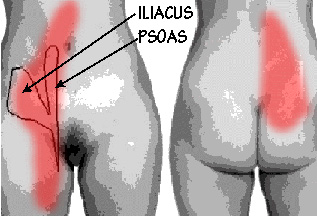
This shows where part of my pain is located. (image courtesy of http://www.cartage.org.lb)

Last night I was in the kitchen and turned from the sink to the counter behind me and my hip popped and hurt.  It hurt for most of the night.  (one of the reasons I had a hard time going to sleep).  This was good information for the doctor.  He took this information and then moved my hip all around, causing a lot of pain.  He came to the conclusion that my psoas may be need to be “clipped”.  (My husband reminded me that the doctor said that he would “release” it.  I remember hearing both terms being used, but perhaps “releasing” is more descriptive of what he’s actually talking about.)   His office is getting a new ultrasound machine, hopefully, next week.  He wants to look at my hip under a live ultrasound to see what it’s doing.  Perhaps we will be closer to getting some answers.

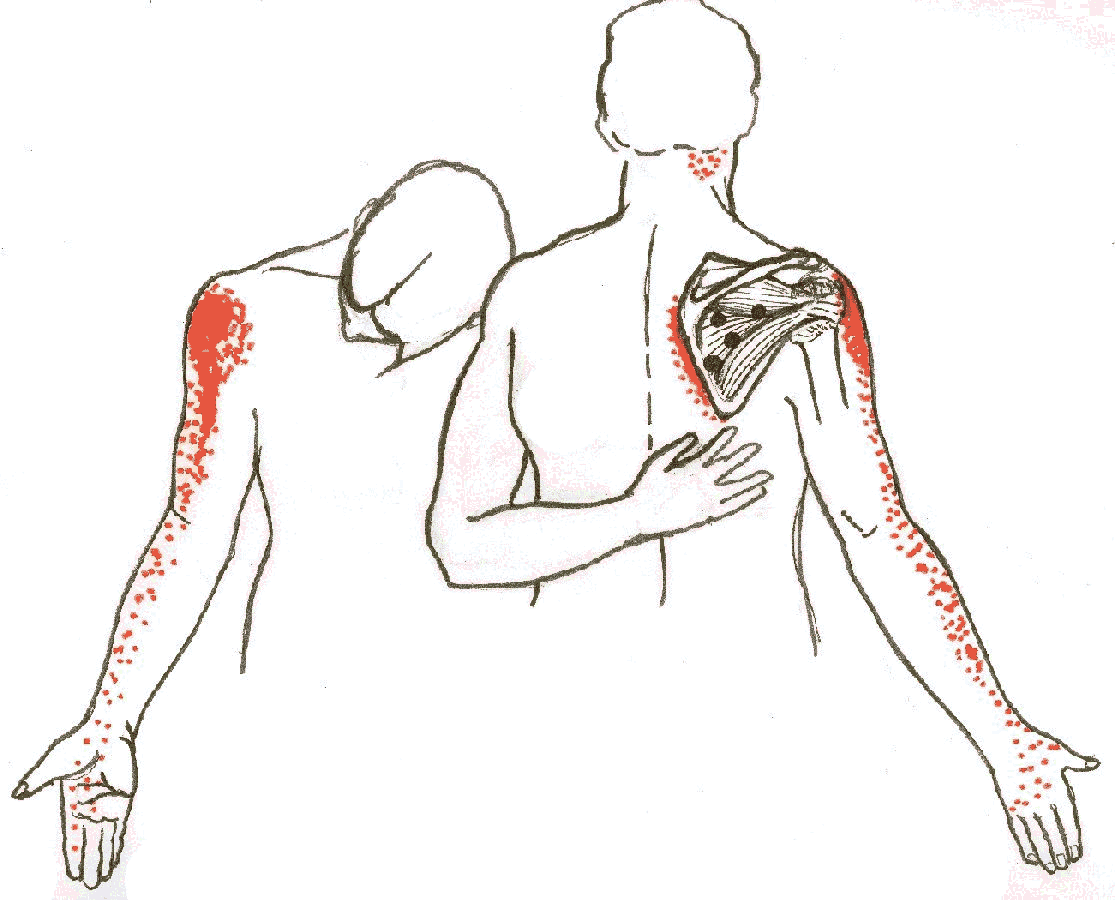
While I was there I decided to ask him about all of the pain I’ve been having in my shoulder, neck, down my arm….and my hand is asleep every time I wake up in the morning.  This has been bothering me much more than my hip lately.

My doctor examined me.  He moved my arm all around, had me push this way and that, and heard the crunching in my shoulder.

He said I have some trouble with my rotator cuff.  He also said mentioned that I have some carpel tunnel troubles.  (I knew that.)  He said that my hand shouldn’t be going to sleep because of my rotator cuff, unless it is very inflamed.  He said it was probably the carpel tunnel, but I mentioned that it doesn’t get better when I where my wrist brace.  So…we just don’t know yet.  He said I need to strengthen my rotator cuff first, and we’ll go from there.

On a better note, my ear isn’t hurting any more, and I haven’t been dizzy any more.  Yay!!

Lately my blog has been having some problems.

I don’t know what happened to my Theme on my blog, but it just wasn’t showing up right.  Some technical difficulties, I guess.  So I tried to fix it, and well, I lost everything that I had in my right sidebar.  I’m trying to fix it up, but bear with me.  Please.

image courtesy of butnowwhat.com

I’m pleased to announce that coming up next on Picnic With Ants

Maureen from Sunshine and Chaos writes about living in limbo!

Stay tuned!!

Meniere’s Treatments Guest Post – Susanna

Susanna, on a trip to see her son in England May, 2010.

Today my guest is Susanna, a lovely woman from Linköping in the southern part of Sweden.  She is married and has three “almost grown up kids”.  She was working in the school system, but last year she went on permanent sick leave from work.

Susanna has had Menières for about ten years, bilateral for three years.

She stresses that “with the support from my family and relatives life is pretty good today!”

Coping with my Menières by Susanna Ahlström

I had my first bad vertigo attack the summer of 2002.  Before that I had tinnitus, fullness in my ear, and a few minor dizzy attacks.  But this time I was really ill and the ENT doctor told me this was Menières.  I was sent home with a diuretic and some pills for seasickness.  And of course I was told to keep a low sodium diet.  I felt better after a few months and started working again.  But I never got rid of the tinnitus or the imbalance and the anxiety I felt was limiting my whole life.  My boss saw how I felt and helped me to see a therapist.  I meant to see her about 10 times – we had our sessions for two years.

After about 5 years I felt so much better and I started full time at work.  My tinnitus didn’t bother meat all, I felt almost normal then I got a new chief at work.  Let’s say this became a hard time at workand my Menière started bothering me again, now with several attacks a week.  A period of trying different treatments started:

Betaserc, the Serc
I´ve taken the pills for many years now, increasing the dosage several times from 8 mg per day till today when I take 64 mg.  This medication is meant to increase the blood flowing in the small vesselsin the inner ear.  I’m not sure if it really helps, but I don’t dare to stop taking it.

Diuretic
I´ve been taking this for many years now on a low dosage.  I can take an extra pill the days before myperiod begins when the body feels a bit swollen.  And I keep on taking this medication, maybe it helps a bit.

SPC-flakes
I´ve been eating these oat flakes with my yoghurt every morning for many years.  You take 1 gram of the flakes for every kilo you weigh, every day.  The oatflakes have been processed in a special way, malted, and contains something called Anti Secretion Factor which helps the body’s fluid and secretion level to be stable.  It´s rather expensive but my doctor prescribes it for me.  My stomach has never been better!!

Tube
I had a tube put in through my eardrum in one ear while I was waiting for the Meniett.  I was able to borrow the Meniett from the hospital to see if this was something for me.  I felt less pressure in my ear while I had the tube, but this was about it.

Meniett
I tried the Meniette for one ear for some months.  I had so much hope before I started but this was nothing for me.

Carbamide/Urea
White crystals in a small plastic bag make me think about other things than medication but this is something you take with some water as soon as possible when a vertigo attack is coming.  It helps the fluid level in your ear (and of course in the entire body) to become lower.  It tastes really bad and almost made me throw up and it didn´t prevent the attack from coming.

Cortisone
When I got Menières in the other ear I took cortisone (prednisolone) on a very high dosage for a few days.  I will never take it again if I don’t have to. I got hyperactive, had a high pulse/heart beat, got a gastric catarrh so bad I fainted at work and ended up at the hospital.  And this treatment didn’t help me at all.

Cortisone injections
A rather new treatment here in Sweden is cortisone injections through the eardrum and into the middle ear.  If the tissue in the middle and inner ear is swollen the cortisone can help.  The injections are given 5 days in a row and you have to lie still on your side for about an hour.  Before the injection I had anesthesia ointment on the eardrum to make it numb.  This treatment was just a little painful, a quick pain while the doctor injected the cortisone.  I got it for both my ears with a few weeks passing between, and then we tried it once again on one ear.  I cannot say it helped much though.

Gentamicin
This is a treatment I didn’t really want to try so when my doctor recommended it I wanted to wait and think about it.  Then I became bilateral and gentamycin injection is no longer an option.  Neither is surgery.  I know they do the saccotomi shunt surgery sometimes but I’m told that many Patients who had the surgery are only helped for a short while.  When I had my worst period of illness I believe the doctors could have done what surgery or treatment they wanted if I only got rid of the vertigo!

This seems to be my story.  I’ve tried so many treatments without any success at all.  For every new treatment I’ve tried my hope has diminished.  But there are a few things I’ve tried which have made iteasier to cope with this illness:

Acupuncture
This has helped me to relax and even to take away the constant dizziness in my head.  Not for long only half an hour or so, but a very good half hour.

Chiropractic and massage
The constant dizziness makes my neck and shoulders stiff, and the stiffness in this part of the body seems to increase the dizziness.  A chiropractor has helped me to make my neck better.  A goodmassage has also helped.

Therapy/counseling/medication
First I met a counselor at the hospital who works with patients from the ENT department.  Later, I’ve seen a psychotherapist for two periods.  When I got ill again four years ago it really made me depressed.  Life was not worth living although suicide was not really an option.  The therapy has helped me to deal with being chronically ill, not being able to work, the guilt I felt of being a lousy mother and wife.  At the therapist I learned not to fight so hard against an illness you cannot win the battle with.  Now I try to walk along and follow the illness.  We haven’t “made friends” but Mr. Menière is not my enemy any more. He is more like the annoying neighbor you have to live beside.  I´ve also started medication to increase the serotonin level, with medicine also called anti depressive pills, on a low dosage.  It doesn’t make life a feast but it certainly makes it easier to deal with the hard issues in a better way than being over whelmed by the problems.

Life today is rather good. The illness has taken a lot from me but also given me something.  New experiences, new friends, new hobbies and I certainly have had to get to know myself!

**Please note that I (Wendy) have added links the treatments that Susanna tried.  The links will lead you to sites that I found giving definitions of the terms, or to studies about the treatment.

As always remember that different treatments work for different people.  We are not doctors and we aren’t telling anyone what they should do.  This series is to allow people with Meniere’s to see how others have dealt with this disease.

Meniere’s Treatments Guest Post – Deb

Deb from Faith Hope and Fighting Spirit is my Guest writer today.  Like many of us she suffered with Meniere’s for several years before she was diagnosed.  Deb is a teacher in Barrie, Ontario, Canada (1 hour north of Toronto).

This is the story of her trials with the treatments she has tried, and what is working for her.

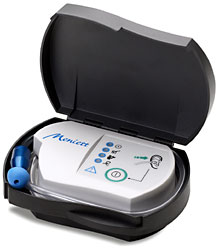
The Meniett Device

Here is the readers digest story of my fight with Meniere’s. I have found the Meniett Device extremely helpful as a treatment, albeit, not a cure. I have tried various treatments over the years, but so far this treatment seems to work the best for me.

It is difficult to track exactly when Meniere’s first hit me but it was likely December 2001.

For 7 years I had attacks but I didn’t know what was wrong with me. Doctors thought they were vertigo migraines. It was not until 2008 that I was diagnosed with Meniere’s Disease and my Oto/ENT prescribed a low sodium diet and Serc. For over a year this helped but by the spring of 2010 I became very sick and began to miss work for weeks at a time. I am a teacher and in the fall of 2010 after a long hot summer I could not return to work. I couldn’t walk. I couldn’t even get dressed by myself or go to the washroom alone. I was desperate. I know I was depressed.

My Oto/ENT just kept giving me more and more Serc that wasn’t doing anything so I tried everything. At one point I was seeing my Oto/ENT, my family doctor, a chiropractor, a natural path, an acupuncturist, a massage therapist and an osteopath! I needed  a secretary to keep me straight with my appointments.

I was then given the opportunity through my Oto/ENT to be fitted with a ventilation tube so I could try a Meniett device. I had read about the device and wanted to try it, even though I wasn’t sure my insurance would cover the $3500.00 cost! This was on September 20th, I was not well enough to go back to school so what a Godsend this Meniett was! Miracles happen daily and I have been fortunate enough to be part of one. God heals in all sorts of ways and with me He chose the Meniett!

After using the machine just 5 days I was well enough to run again! I had missed this desperately. Three weeks after that on October 12th I was able to return to school. I was so happy to see my students and to lead a “normal” life. I hope I remember this feeling always. Illness really can be a blessing, especially when you can be so thankful for the healing in the end.

Since then I have used the machine 3-4 times a day. Each session takes about 5-7 minutes and it is small enough that I just carry it to work with me and use it on my lunch. My original tube was blocked recently but my Oto/ENT replaced it with a larger one that should last me 18 months. The procedure for getting the tube inserted takes about 5-10 minutes and is not that painful. My doctor just used a local anesthetic that burned a bit when it was put on but that’s it.

The premise behind how it works is that the air puts pressure into the inner ear which then moves the excess endolymphatic fluid to the endolymphatic sac.

You can check out more information on the Meniett and how it is used at:  http://www.meniett.com/

They will usually give you a 60 day trial period. If it doesn’t work for you, just send it back and they will not charge your credit card.

I am not entirely drug free. I still use meclizine periodically and I take Ativan at night if I am feeling extra stressed or I can feel the spins lurking in the back of my head. The really good news is that after a good fight with my insurance company it looks like they will finally pick up the cost!

I hope this helps. I wish all of you good health and strength to continue the good fight!

**Please note that I (Wendy) have added links the treatments that Deb tried.  The links will lead you to sites that I found explaining the premise behind these treatments, or to definitions of the terms.

As always remember that different treatments work for different people.  We are not doctors and we aren’t telling anyone what they should do.  This series is to allow people with Meniere’s to see how others have dealt with this disease.

To keep up with Deb’s progress please check out her blog Faith, Hope, and Fighting Spirit.

Next Post: Meniere’s Treatments Guest Post – Susanna

Meniere’s Treatments Guest Post – Angelea

Angelea is a fellow Meniere’s Warrior and Blogger.  Visit her blog at A Day In The Life With Meniere’s to keep up with her story.

Angelea lives in San Diego, California and is a wife, mother of three, and works as a nutrition support dietitian for a home infusion company.

This is her story:

When you are miserable and living in fear of leaving your home because of recurrent vertigo, you will try almost anything to feel better and get your life back.  From the day I was first diagnosed with Meniere’s disease, this is how I have felt.  Initially, I was confident I would respond to “conservative medical management.”  The odds were in my favor if you believe the statistics that 80% of people with MM (Meniere’s) do, in fact, manage pretty well on diuretics and a low-sodium diet that includes little to no caffeine or alcohol.  Even though salt, caffeine, and alcohol in the form of a glass of red wine with dinner were the cornerstones of my otherwise healthy diet, I was up for the challenge.  Bring it on! 

Unfortunately, despite a complete overhaul in my diet that resulted in an almost ten pound weight loss, vertigo episodes lasting 8 to 12 hours continued to plague me anywhere from two to four times weekly.  During this time, my dedicated husband scoured the internet and came up with some alternative treatments for me to try.

The first alternative to my doctor’s first line of defense (diuretics and diet) was to try antivirals.  There are a few published studies on relatively large populations of MM sufferers that suggest a strong correlation between the herpes class of viruses and MM and a significant improvement in symptoms with antivirals.  My doctor was familiar with these studies, however he is not convinced of a link just yet.  Regardless, antivirals being a relatively safe class of drugs, he was agreeable to prescribe a short course of Acyclovir.  I started off following the American (Gacek, et al) study’s protocol of 800 mg 4 times a day for 3 weeks.  By the end of the first week, my symptoms seemed to greatly improve.  But the vertigo returned with a vengeance once I began tapering to 3 times a day.  At that point, I asked to increase to 5 times a day consistent with the common dosage given for other herpes infections.   Again I improved over the course of the next 2 weeks.  But my prescription ran out and my doctor was not comfortable allowing me to continue on the high doses indefinitely.  Honestly, I didn’t want to be dependent on taking pills for who knows how long and continue to live in fear every time I tried to taper to a maintenance dose.  I just wanted this nightmare to end.

The next alternative treatment was a supplement regimen promoted by a guy on-line who calls himself John of Ohio.  Apparently a retired biology teacher, he did some of his own research and claims to have gained control of his own MM symptoms by taking a plethora of dietary supplements.  His logic was, well, logical so it seemed to be worth a try. It turned out not to be for me.   First of all, I was popping pills all day.  A couple had to be taken on an empty stomach, a couple more with food.  Some were familiar vitamin supplements and others were obscure to the point that they could only be found from a small handful of on-line suppliers.  Nonetheless, I stuck with it for a couple of months.  Some followers claimed relief almost immediately, yet others didn’t notice results for months.  It all sounded really good in theory; however, I have my reservations about the supplement industry, as well as the purity and long-term safety of their products.  Time and again, private testing companies have proven that many supplements are contaminated with potentially dangerous ingredients and/or contain significantly more or less of the active ingredient than what is stated on the label.  Then there are the studies that found that Beta Carotene supplementation, for example, promotes lung cancer cell growth and folate supplementation is linked to an increased incidence of colon cancer.  Finally, if one is taking a bioactive agent in high enough doses to have a therapeutic effect on the inner ear where blood supply is low, imagine the potential effects, good or bad, on the tissues in the rest of the body.

The way I saw it at this point was that it was only my ear that had a problem, so why not localize my treatment approach?
But, at the encouragement of my husband after having had read some pretty convincing testimonials on-line, I had to exhaust one more alternative treatment: upper cervical chiropractic adjustments, aka NUCCA.  The theory here goes that the nerves between your cervical vertebrae can become compressed and this can contribute to everything from MM to MS.  Again, logically, it could be possible, especially since this is the segment of the spinal cord innervating one’s ears and eyes, among other things.  Of course there were only two NUCCA chiros in my area and neither was covered by my insurance even though I have chiropractic coverage.  So out came a boatload of money for a 3-month course of adjustments and, somewhat worrisome, x-rays.  Yes, my posture improved a bit, I think, and it was completely painless to the point that it was hard to really believe this guy was doing anything at all except laying of hands on my neck.  A nice enough (young) guy, but as I got to know him over the weeks I found him to be quite naïve and really just not very smart.  I would say it was a relatively harmless thing to have tried except for the exposure to all the unnecessary radiation and the huge hit to our credit card.  And I continued to have vertigo as bad as ever.

By this time, I was 7 months into this nightmare and I just wanted to wake up!  Back to the doctor I went and it was decided the next best course to try was intratympanic dexamethasone injections.  I got one in October with some improvement and another in November.  I made it through December and January vertigo-free and finally feeling like a normal person again.  Then the week before my son’s 9th birthday, wham!  The nightmare returned.  I went in for another series of dex injections, as well as a trial of another diuretic (hydrochlorothiazide to Neptazane and back to HCTZ).  The dex failed miserably and I developed an allergic reaction to the new diuretic.  At this point, my doctor suggested adding high doses of oral steroids to another intratympanic dex shot.  Having worked with patients on oral steroids, I was all too familiar with the nasty side effects of these potentially dangerous drugs.  Plus, I was devastated to have experienced such a wonderful period of remission followed by complete failure and misery.  I was done.  I wanted off this rollercoaster.  I wanted to move on to something that had the hope of offering permanent, or at least long-term, relief.

I had been reading about intratympanic gentamicin treatments for months by now and this treatment strategy seemed to offer the best of both worlds: it was noninvasive and potentially permanent.  I had no fear.  My life was severely limited by now and I had nothing to lose.  So on March 25th, 2010, I had my first gentamicin injection.  It was a nonevent, painless as the dex had been.  I went home and waited.  I had a couple more vertigo attacks, but about 10 days later I began feeling the telltale signs that something was happening.  My balance was very poor and I felt really weird, but the vertigo and nausea were gone!  I would say it took about 3 months to regain a pretty decent sense of balance and another month or two for my hearing to improve a bit to a new baseline.  I still felt the episodic pressure in my ear, as well as fluctuating tinnitus just as I had before with my vertigo attacks, but I could function and life went on.  I continued to work, run the kids around town, and no longer lived in fear.

My doctor was surprised I had responded after just one gent shot.  He gives a lot of them and said the average number of shots patients needed before they got relief was 2.something.  I had read, and he concurred, that the vertigo could return, usually within the first year.  And sure enough, it did.  I got 8 beautiful months of relief and then my world turned upside down once again in November, 2010.  While it was disappointing, I was not defeated.  I knew what worked and went back to the doctor for another shot two days later. Then I waited and waited and waited.  Six weeks later, I was again confined to my house and suffering long episodes of vertigo several times weekly.   This had to be one of my lowest points.  The what-ifs reared their ugly heads and I had to seriously consider surgery.  I got a second opinion at the House Ear Clinic, even though my own doctor is a world-renowned specialist in treating MM.   They had nothing particularly new or better to offer me.

At my follow-up appointment with my regular neurotologist on December 30th, I was prepared to sign on the dotted line to have surgery: either endolymphatic shunt surgery or the more invasive, but more promising, vestibular nerve section (VNS).  But my doctor was agreeable to try one more gent shot, even though my hearing had diminished quite a bit over time.  The risk of too much gent being deafness.  But this, to me, was preferable to the possibility of a failed sac surgery or to anyone poking around behind the protective barrier of my skull.

This time I waited 3 long weeks and then, success!  I have been vertigo-free since the 3rd week of January.  I still feel off-balance and have lots of little mini-spins lasting a second or two several, several times a day.  I still want to complain many days, but I can’t.  I am vertigo-free!  Hallelujah!
I don’t know what the future holds, but I am just grateful for today.

Be sure to follow Angelea’s progress on her blog A Day In The Life With Meniere’s.

Treatments for Meniere’s Part 2 – Medication

image from zazzle.com

Treatment with Medicine – I’ve tried both Antiviral and Immuno-suppressant drugs, neither of them worked for me.  The thought behind these treatments?  Some doctors believe that there could be a link between Meniere’s and the Herpes Virus, or that it is an auto-immune disease.  I don’t know if either of these are true, but some people get relief from these treatments.

Other drugs I’ve been on: Antivert or Meclizine (meclizine hydrocloride)- this is a vestibular sedative, it is prescribed to help with the dizziness.  (I think it rather ironic that one of the side effects from this medication can be dizziness.)  This worked for a while, when I was having slight dizziness, but it didn’t help stop the vertigo.  As my symptoms progressed I was put on Valium (diazapam), this is another vestibular sedative.  I had much more success with this drug at preventing the vertigo.  However, I had to take more than was recommended to help stave off an attack.  Another drug that has been very beneficial to me has been Phenergan.  This is an anti-nausea drug that is also a vestibular sedative.  I had it in pill form and suppository.  If I start to feel dizzy I immediately take a Valium and a Phenergan, sometimes that’s all I’d need.  Other times, I would continue to feel bad, like an attack was imminent, and I would need more.  I would then take another Valium and a Phenergan suppository.  I don’t know if it’s just me or not, but often I would feel like I desperately needed to go to the bathroom and the first suppository would come right out.  I would then use another and often that would do the trick and an attack would be averted.

However, sometimes I would have an attack no matter how much I tried to avoid it.

I’ve also been on a diuretic.  I know I’ve been on more than one, but the last one I was on was Dyazide (hydrochlorothiazide and triamterene).  The thought behind this treatment is the same as with a Low Salt Diet.  It is used to reduce bodily fluids especially the fluid in the endolymphatic area.

As with the low salt diet, I’m not sure if this worked or not for me.  I was always afraid to stop either the low salt diet or the diuretic for feat that my symptoms would increase.  I was taken off of the diuretic after my latest treatment  (the Cerebral Spinal Fluid treatment), and my symptoms have been under control.

Not really Medicine, but thought I’d include Supplements – I’ve tried many supplements that promised help with tinnitus and Meniere’s.  I didn’t find any help from these.  However, some patients swear by them.   (Dr. Kaylie said there were no scientific evidence that any supplement actually helped, but if some people found relief he was all for it.)

For even more information on these therapies and other treatments for Meniere’s go to Meniere’s Info.com.

Please leave a comment telling what Medication Therapy you have tried, and how it has helped, or hasn’t.  If you have a blog, be sure to leave that address so others can read about your experiences.

Next Post: Treatments for Meniere’s Part 3 – Endolymphatic Surgery

I have Fructose Malabsorption

I know I promised Part 2 of Treatments for Meniere’s as the next post, but I got some news today that I wanted to share.  It may also go along with the last post.

image from the fructose malabsorption group on Yahoo

Today I got the results of my Breath Tests, I talked about those previous posts.  They tested for digestion issues, Lactose Intolerance, and Fructose Intolerance (otherwise known as Fructose Malabsorption).  I have the later.

This is going to take some getting used to.  As you probably know I already have to avoid gluten, this will just add to the things I can’t eat.  I knew this may be a problem, but I never knew there would be so many things I wouldn’t be able to eat.  I’m shocked actually.

According to the diet my doctor gave me there are only 9 vegetables I can eat. And after doing some research on this disorder on the web, I found that one of those vegetables are not recommended.  I will be calling a nutritionist tomorrow morning to get in as soon as possible to help me with this.

Not only can I not eat fruit, and many vegetables, I can’t eat any sugar at all.

I don’t know if this aggravated my Meniere’s symptoms or not, but I’m sure it effected me in more ways than I know.

Life without chocolate…*sigh*.

What’s Up with Wendy

Cherry Trees are blooming in NC

It’s beginning to look a lot like…Spring!  The cherry trees are blooming.  The grass is starting to have little green spots.  The weather is crazy; one day it’s hot, the next day it’s cold.  Spring is trying to…well..spring!  It’s an exciting time, watching life begin.  We are busy planning our garden, it’s so nice to think that this year I will be able to have a garden.  This is the third year we’ve been in this house, and I really wanted to have a garden, but this is the first time I thought I might actually be able to take care of one!

I’m so excited about how well I’ve been feeling.  I’ve been busy, busy, busy doing things I haven’t been able to do in so long.  I know it probably sounds crazy, but I’m so excited about being able to clean!  Yes, I scrubbed our bathroom and was just so happy!  I’ve been doing laundry!  We have a front loading washer and dryer and before I couldn’t load and unload them without getting dizzy, so doing laundry is just so exciting.

I’m sure I won’t be as excited about doing house work for long, but right now I’m just so happy.

I’m also excited about something else.  I haven’t had diarrhea in over a week now!  I don’t know what has changed, but I’m so very happy.  Now if I could just take off this weight!  Hopefully, now that I can move more the weight will start to come off.  I sure hope so.

One unfortunate thing about moving more, my hip is starting to really bother me again.  I’m hoping to start going to the pool and working with it.  I don’t know if it will work, but it has before.  If not, I guess I’ll have to start considering surgery.  But not until I’ve exhausted every other option!

Right now I’m doing the last Breath Test.  Today is the fructose test.  The stuff I had to drink was so sweet, I still have a sickly sweet taste in my mouth.  I’m so hungry, I haven’t had anything to eat since about 8:30pm last night.  Just 2 more hours to go, and I’ll be finished!  I’m looking forward to finding out what these tests show.  I doubt it will show anything, as usual, but at least I will know.  : )  I’ll let you know next week!

No New Punctures for Now

image found at http://coffee-shop-dharma.blogspot.com

I just got off the phone with Dr. Gray.  I told her how much better I’m feeling, and she said she didn’t want to even test my pressure if I’m feeling this good.  She doesn’t want to mess around with things.

She is very hopeful that I will continue to feel better.  (me too!)

I am wondering if the reason I’m feeling so much better is because I stopped taking Topamax.  It can lower your pressure, so it could have been causing my pressure to be too low.  Or it could also be because I started taking B12 shots.  Tomorrow will be week 3, so I should really be starting to feel a difference there.  I have much more energy, and I just feel better.  Perhaps a combination of the two has really made the difference.  I don’t know, but I’m just grateful to be feeling so very much better!

What a difference from just a couple of months ago, huh?

Oh, I am talking on the phone again!  I had 3 conversations on the phone today and I was able to hear the people, and I didn’t get nauseous.  (often when I tried to talk on the phone before, even when I could hear, it made me so dizzy I would get sick to my stomach)