Time to spread the love. Shout out all your favorite Health Advocates! Make sure to share a few sentences explaining just how grateful you are for them.
Listing all of my favorite Health Advocates would take up a book. There is no way I can give a shout out to all of them in this tiny amount of space. When I first read this prompt I thought it read that I was to give a shout out to my favorite health advocate, and I thought that was impossible, but I thought of a way to do it, kind of. Listing all, really is impossible. Please see my post from Friday, Friday Follow, for a list of many of my favorites; there are still more, but that will give you a good start. Today I’ll just list a three blogs I’ve been following the longest that I feel are still doing an exceptional job.
Denise is an advocate for Meniere’s Disease, hearing loss and service dogs. She tells her story with wit and flare in a weekly post on her blog Hearing Elmo. There you will hear about her life with Meniere’s Disease, working and studying in academia, her family, life with a service dog, and her Faith. I’m proud to call her friend.
Madelyn writes at ADD…and so much more, as you can tell by the title she is an advocate for ADD…and so much more! Madelyn’s blog is a place for her to “let you know about new ADD opportunities and to post all kinds of seemingly disconnected content.” This blog is intended to help: anyone with an Executive Functioning Disorder. I don’t have ADD and I get so much from her blog. She is an ADD coach, has won a number of awards, and I think she’s just the bomb.
Kara from Polishing Dookie does an exceptional job making people feel comfortable with her illnesses with a sense of humor and intelligence that keeps you reading. Her tag line “Making the most of the sh*t I’ve got left” shows her sense of humor about her IBD (Irritable Bowel Disease). Kara takes you on a ride that is her life, and you will be happy to join her.
Case of the Mondays. Write about something that gets you down, burns you out, or makes you sad. Purge it in a blog post. Turn it around at the end and tell Tuesday why you’re ready for it.
I don’t want to get all caught up in the self pitting part of Blue Monday. I had a pretty rough week last week, this week I’m determined to turn it around. Let me tell you about it.
Last week I had severe migraines almost every day. This week I plan to take medication as soon as the headaches start. I will not worry so much about running out of meds, or rebound headaches. I will work to stop this cycle of severe headaches before it gets too strong of a grip. (hopefully)
Last week I was very off balance and was having mini attacks of vertigo. Last week I was not prepared for this. I’m too used to having my husband here to help me. This week I will be prepared to help myself as much as possible.
Last week I couldn’t walk without holding on tight to my walker. This week I will bring my good walker in the house from out of the car, I have a seat on it and a better way to carry things.
Last week I had a hard time getting myself food because of my balance, this week I will be prepared and will have food ready that I can just grab and go. Food that I can balance on my walker.
Last week my anxiety was very high. This week I will get back to meditating and taking breaks for deep breathing exercises.
Last week I beat myself up because I felt so needy and dependent. This week I will practice self compassion.
Last week I cried a lot. This week I will focus on the positive.
This week has been a challenge physically, and mentally. It hasn’t been horrible, I just haven’t felt good. I’ve been a bit wonky. Feeling off balance and having a hard time keeping myself upright. The election has made me anxious and panicky. As the week went on I started to feel a bit better. Good thing too because I got good news this week that I would be going out of town on Sunday. So today (Sunday) I’ll be visiting with friends.
It was so much fun planning the trip. Finding out that both friends would be home and would have time for me. I’ll see the first one in the early afternoon when I first get into town and the second will be cooking dinner for me. This is the most exciting part of my week! I get to see my good friend, her husband and son. We’ll have lunch together and visit. It’ll be grand. Then off to have a friend cook for me and my husband, and I’m finally meeting her beau. They’ve been dating for months now and I’m finally meeting him. I’m so excited!
I will admit there is a little apprehension when I’m going to see other people. What if I can’t hear them? What if I get confused? What if my head hurts too bad? What if I have vertigo?
Today I will not allow the “What if’s” to sabotage me. If something happens I’ll deal with it. The friends I’m seeing are the most understanding people I know, so there is no pressure there.
The excitement of knowing the trip is coming has been with me all week. As I’m writing this (yes, I’m writing this post a day early so I can go on my trip and not worry about writing it) I’m excited about seeing my friends and all the experiences I’ll have when I’m with them. I’m so grateful for this time.
What has brought you happiness this week? What are you grateful for?
This letter is to the first doctor I saw for vertigo.
Dr. H,
When I first saw you I was filled with fear and longing to understand what was happening to me. I had just been seen at the emergency room after 12 hours of vertigo, accompanied with almost constant vomiting. It was there that I first heard the mention of Meniere’s Disease. I was told that I should see an ENT (Ear, Nose, and Throat doctor) to help determine the cause of my vertigo. So I came to see you.
You talked to me and gave me a hearing test and told me that I had Meniere’s Disease. You put me on a low salt diet and sent me home. I trusted you. Your staff was amazing. Your nurse had the best bedside manner, she made up for your aloofness. You were a busy doctor, I understood.
The vertigo continued to come back, over and over again. I kept coming back to see you. You continued to give me hearing tests. Yes they showed that my hearing fluctuated and I was losing some of the low frequencies, common in Meniere’s Disease, but this is the only test you ran on me. You said that putting tubes in the affected ear should help. Again, I trusted you. So I got a tube in my ear. It seemed to work.
After a couple of months the vertigo came back. The tube had come out. You said I should have a tube put in that stays much longer, but it requires general anesthesia to have it done. I had the tube put in my ear. I had this done a number of times. I’d have vertigo, it would be found that the tube came out, I’d get another tube.
After seven years of the merry-go-round of getting tubes the illness spread to the other ear. So once again I went under to get tubes put in both ears. This time the vertigo didn’t stop at all. I was miserable. I went back to see you. Something had to be done. You told me that you needed to send me to a different doctor because, you didn’t “know much about Meniere’s”. How could you treat someone for SEVEN YEARS and not know much about the disease? How could you even begin to diagnose someone if you know nothing about the disease?
When I found a different doctor, no I didn’t go to the one you recommended, I found my own. I found out that tubes are not a treatment for Meniere’s. It hasn’t been a treatment for many years. You really didn’t have any idea what you were doing did you?
When I started to get the information together to file for disability I requested my files from you and found out that you never put a diagnosis of Meniere’s Disease in my files, you put in unknown Vestibular Illness. How can you tell a patient she has a disease when you didn’t even put it in her files? Is this even legal?
I’m sure my story is all too familiar among your patients, unfortunately many may not even know that you are treating them wrong. I regret that I cannot stop you from telling anyone else that they have Meniere’s Disease. You should not treat people with vertigo. There are a number of things that could have been wrong with me that were not Meniere’s Disease, you just happened to be right. You did not order any vestibular testing or an MRI. You did not rule out any other vestibular disorders or a brain tumor. When presented with a patient who has vertigo you should send them to a doctor who knows more about it immediately. What you did to me is nothing short of neglect.
How can you play with people’s lives? Is having a big business practice more important than the patient?
I need to thank you for teaching me that I know more about my health than any doctor. I knew something wasn’t right when I was seeing you, I just didn’t know what. I had a feeling there should have been more testing, but I trusted you. I now know to never blindly trust a doctor. Before you, I would never have thought to do a lot of research into my disease. I would never have thought of firing my doctor. But I fired you.
I left your office and didn’t go back. Your office wrote me an email reminding me I hadn’t be in for a while and wanting me back. I wrote them back explaining my frustration with my treatment. I never received a reply. This is just more evidence that you think very little of your patients.
Please cease treating those who come to you with vertigo. Immediately send those patients to a doctor who knows more about vestibular issues than you do.
There are so many amazing people, it is hard for me to pick just a few to pass on to you, but I’ll give it a try. If I don’t mention someone it doesn’t mean that I don’t think you are great!! It just means I ran out of room.
Tweeters worth reading their tweets on Twitter.
@HearingHealthM (Timely information and lively insights for everyone who cares about hearing loss)
Was starting your advocacy journey a hard decision? Were you anxious and hesitant or were you excited and ready to share your story? Tell us how you chose to start advocating for your condition.
The start of my advocacy journey for Meniere’s Disease and other chronic illnesses is kind of a long story. First I found out I am allergic to wheat and suspected to have celiac disease. Here, let me ‘splain….I had been generally sick for a long time when I found out I’m allergic to wheat, so I stopped eating wheat. I started to feel a whole lot better, but I was still getting sick sporadically, so I decided to stop eating gluten. My doctor then suspected that I may have celiac disease. I was given the blood test but tested negative, I was given it again and tested positive. This provided no definitive results, so I would need a biopsy from my small intestines. However, the only way for this test to work was for me to start eating gluten again for a month or two. I asked what the treatment was if I was found to have celiac disease and it was a gluten free diet. Well I was already eating that way, so I decided to just keep on a gluten free diet instead of having the test. Maybe I’ll have it one day, but probably not. The doctors are pretty sure I have it due to the last blood test, I don’t really care, I know I can’t eat gluten.
This was before there was a lot of knowledge about a gluten free life style and celiac disease, so I became an advocate. I started a blog and worked hard to bring awareness. I worked with local groups. I was a taste tester for Whole Foods Gluten Free Bake House. It was an exciting time for me, I felt like I was making a difference. Then my Meniere’s Disease got so much worse.
When the Meniere’s Disease went bilateral, meaning I suddenly had it in both ears instead of one, I had to rethink my life. (if you don’t know about Meniere’s Disease, and you’d like to, please see Meniere’s Disease-My Story at the top of the page.) Once I saw my new doctor at Duke Medical Center I had renewed hope (more than I should have really). I was going to focus on getting healthier. I wanted to increase my exercise and start eating even healthier. I decided to stop writing my gluten free blog and start a blog all about me getting as healthy as possible with Meniere’s Disease and (suspected) celiac disease. This blog was called 365 Days to a Healthier Me.
I soon discovered I was not going to be able to focus as much on getting healthier as I was on simply getting through the day. The vertigo was happening almost daily and I was losing my hearing rapidly. I decided to start writing about my experiences with Meniere’s Disease (I stopped writing about a gluten free lifestyle by then) and this naturally morphed into advocacy. I found others were out there who were struggling as I was and needed some support. Soon I started talking about other illnesses I struggle with on a daily basis, such as chronic migraines and bipolar disorder. I have found that people with chronic illnesses need a voice. I hope I can add a little voice to a lot of other voices.
After the loss of my hearing and with continued struggles with vertigo I haven’t been able to advocate in person, but I continue to try to keep up the good fight via the internet. Sometimes I’m not able to do as much as I’d like due to my illnesses, but I’ll keep trying. That’s all we can do. Keep trying.
I’m opening my blog to anyone who wants a place to tell their story. If you have a blog or not you are welcome to come here and share.
I want to hear what brought you to the point you are now. What has your chronic illness has taught you? What do you do to handle living with a chronic illness? What is the story behind your illness? How were you diagnosed? Do you care of a loved one with a chronic illness? I’d love to hear your story. What’s your story?? I know you have one.
If you are interested just go to the About Me – Contact Me tab at the top of this page and drop me a line.
I look forward to hearing from you!!
** no solicitations will be allowed. I reserve the right to reject any submission. I hope you understand.
I found a post on Hearing Health and Technology Matters that I felt would be of interest to many of you.
Thoughts on Migraine HypersensitivityBy Alan Desmond On July 18, 2016
“As the director of a balance and vestibular clinic, I see many patients with complaints of dizziness, disorientation, and motion sensitivity related to migraine. We work closely with our neurology colleagues in managing these patients. The International Headache Society has an official classification of “vestibular migraine.”
I got my first cochlear implant (CI) in July of 2011, and my second in September of 2013. When I was going through that time I wrote some about it but I’ve never talked about what it’s like to live with my cochlear implants (CIs). A friend of mine asked me a few questions about it recently. I’m here today to answer some of those questions.
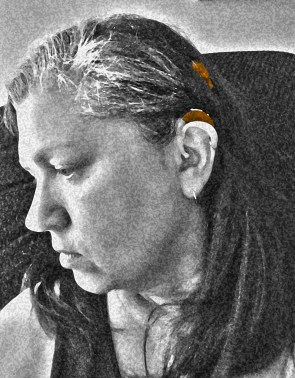
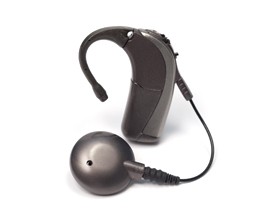
What exactly is a Cochlear Implant? – To put it simply, a Cochlear Implant is an electronic device that can help provide a sense of sound to someone who is deaf or severely hard of hearing. Let me see if I can explain this in my own words. There is a part that is on the outside of the head that consist of a microphone a processor and a transmitter. There is part that is on the inside that is the stimulator and the electrode array. Sound comes into the microphone and goes through the speech processor to the transmitter (the microphone and processor are the parts around the ear, the transmitter is the part that is on the outside of the head – it is held on by a magnet connecting it to the receiver/stimulator). The stimulator is in my head, between the skin and the skull. When the sound comes in to the stimulator it is then sent to the electrode array it then send impulses to the auditory nerves. For a better explanation please go here. (you can see the microphone, processor and transmitter on me in the photo at the top of the post – yes mine are orange -, and in the second photo below)
This is a photo of the receiver/stimulator and the array. The array is the wire it is what goes in the cochlea of the ear and sends impulses to the auditory nerves. The stimulator is right on the inside of my head. The transmitter connects to the stimulator by a magnet.This is a photo of a microphone, processor, and transmitter. You can readily see the microphone that hooks around the ear but there is one at the top you can’t really see. Many processors have microphones that are not readily seen.
Why did you get cochlear implants? – I lost my hearing due to Meniere’s Disease. My hearing loss happened fairly quickly. I was diagnosed bilateral in November of 2009. In 2010 I got hearing aids, within 3 months of having my hearing aids I couldn’t understand anything out of my left ear. That sent me on the tract to getting my first CI. (July 2011) By the time I received my first CI, the hearing in my right ear deteriorated to the point that my hearing aid no longer worked. It took a little while, but I soon got my second CI.(September 2013) Why did I get cochlear implants? because that was the only way I would be able to “hear” anything.
How does a cochlear implant work? – I’m going to quote this straight from the National Institute of Deafness and other Communication Disorders site. “A cochlear implant is very different from a hearing aid. Hearing aids amplify sounds so they may be detected by damaged ears. Cochlear implants bypass damaged portions of the ear and directly stimulate the auditory nerve. Signals generated by the implant are sent by way of the auditory nerve to the brain, which recognizes the signals as sound.”
Do you hear the same with a cochlear implant as a you do with normal hearing? – No. Some people can understand words and sounds immediately, other people can only hear clicks and whistles. It is a completely different way of hearing and your brain has to be retrained. When I was first activated I could understand a lot of words from the start, but everyone sounded like they had been sucking on helium. A lot of Donald Duck and Mickey Mouse voices were around. Soon my brain started to remember what certain sounds sound like and I started hearing things the way I used to, for the most part. When I hear something I’ve never heard before things can sound very odd. Sometimes when I meet a new person their voice will get that cartoon sound until I get used to them. The longer you use your CIs the better you hear with them, so 10 years from now I should hear better than I do now.
Do you now hear like everyone else? or is it odd? What is your hearing like now? – This is the big question isn’t it? What is my hearing like now? First I’ll tell you about challenges I have that a lot of people with CIs have, then I’ll tell you about my personal challenges.
I often can’t hear when someone speaks behind me. If there is noise in the room I have a very hard time hearing. (the newer CI’s are better for this, even though I have a newer CI I still have a hard time) In groups it is very hard to keep up with what everyone is saying. I am much better at conversing one on one. I find I it is much easier for me if the person is facing me so I can read their lips while they are talking to me. Between the two of those I do pretty well, but put me in a crowded room, and I’m lost. Heck, put me in a room with more than one person and I can get pretty lost.
I think I might be able to hear better if I had more practice, I’m not sure. Most of the time I only talk with Stuart. I talk to my doctors. I talk with our roommate, but I have a very hard time understanding him. His voice is deep and I simply cannot understand most of what he says. It makes things difficult, and sad. But for the most part I don’t see anyone else. Since we moved I haven’t met many new people, it’s hard to get used to groups and hearing other people when I don’t have the opportunity. However, it’s also really hard to put myself out there in those situations because I get so lost and confused. It does make meeting new people even more challenging.
Unlike most people with cochlear implants my hearing fluctuates. Some people with Meniere’s who get CI’s end up still having fluctuating hearing. Normally this happens when we have vertigo, our hearing will change and we need to get our CI’s adjusted. My hearing doesn’t fluctuate just when I have a vertigo attack it happens every day.
Let me tell you what an average day for me is like. I’ll get up and put on my cochlear implants, at first it takes me a little bit to get used to suddenly hearing sound. Everything sounds a bit loud. Then things will normally calm down and my hearing is stable for a few hours, but every evening my hearing will change. It’s hard to explain what it sounds like, it gets hollow sounding and can sound way too loud. I’m always telling Stuart to please be quieter. Sometimes my hearing will change throughout the day. I will often say, “I’m having a bad hearing day.” I’m thrilled when I can say I’m having a good hearing day.
When I take my CI’s off the world changes. Suddenly the only thing I can hear is my tinnitus. (When I have my CI’s on the sound of the outside world helps me to not notice my tinnitus as much.)
I don’t know sign language. I am working on learning some, but I haven’t been able to take a class. At times Stuart and I can only communicate by me reading his lips and the little bit of sign language we know.
What is a challenge you wouldn’t normally think about? – This one is easy, having the headpiece suddenly fly off because I got too close to something metal. I have a bracelet that I wear sometimes and if I put my arm up around my head the CI headpiece (the transmitter) will jump off and stick to it. It’s kind of funny, kind of annoying. Other times when I want to lie down the headpiece won’t stay on. This is annoying, especially when I’m sick. I deal with vertigo better when I can hear what is going on around me since I can’t focus on anything, but during an attack I need to lie down, this often knocks my CI off and I can’t hear anything out of one ear.
Does it hurt? – Well the surgery hurt, but it wasn’t so bad. It is actually an out-patient surgery. Does it hurt on a day-to-day basis? Not really. If the magnets that are holding the headpiece to my head are too strong it hurts, but then I can change that. I have screws that are very close to the surface right behind my ears. One ear is worse than the other. Most people don’t have this problem, normally when it heals fat and cartilage form around the screws and you don’t notice them, for me the screw is right up against the skin. Sometimes this hurts. Sometimes my processor and glasses will rub on them. My sun glass arms are thicker than my daily glasses and they will cause that area to hurt. If I can lie down on it, it hurts a bit. Other than that, no it doesn’t hurt. If I didn’t have the screw issue I really wouldn’t even notice I have them on.
Now I just have to share the funniest thing I’ve misheard due to my hearing loss– Once I asked Stuart what Jesus was other than seen as a prophet and son of God. The answer I heard was, “Jesus was Jimmy Buffett” I busted out laughing. “Whaaat? Jesus was Jimmy Buffett??” What Stuart actually said was, “Jesus was a Jewish Carpenter.” I still get the giggles when I think about Jesus being Jimmy Buffett!









 I got my first cochlear implant (CI) in July of 2011, and my second in September of 2013. When I was going through that time I wrote some about it but I’ve never talked about what it’s like to live with my cochlear implants (CIs). A friend of mine asked me a few questions about it recently. I’m here today to answer some of those questions.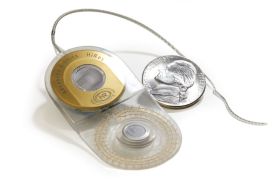
 Picnic with Ants