
When people think of grief they often think of death, they don’t think about grieving over other significant losses. Those of us who have had major losses due to chronic illness know all too well that we grieve those losses.
The five stages of normal grief that were first proposed by Elisabeth Kübler-Ross in her 1969 book “On Death and Dying” are: Denial, Bargaining, Depression, Anger, and Acceptance. Kübler-Ross describes these stages as being progressive, you needed to resolve one stage before moving on to the next. This is no longer thought to be true. It is accepted that most people who have loss go through states of grief but it is not linear nor is it finite.
The
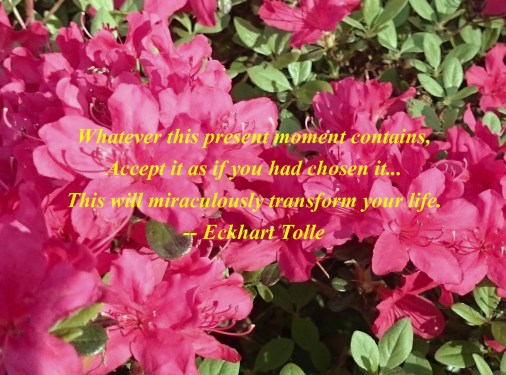
Often people think of acceptance as being okay with what happened. That is not the case. Most people never feel completely okay about a great loss. Acceptance is about accepting a new reality. This is the way life is now, it is the new norm, our lives have been forever changed and we must adjust accordingly. At first finding acceptance could be just having more good days than bad. We can never replace what has been lost. However, we must listen to our needs; we change, we evolve, we accept.
Once you have reached a good level of acceptance this doesn’t mean you can’t feel sad again. We are constantly reminded of our losses, when these reminders arise we can find ourselves feeling grief again. It’s at these times that our acceptance is most helpful. We may feel our losses, but we know there is life after.
I accepted my losses long ago, however, feelings of grief do come flooding back from time to time, especially if I lose something else. When one is chronically ill, we often find we lose more things as time goes on, even when those losses have nothing to do with our illness it can bring back all the emotions from our previous losses.
For example, in the last 2 years I’ve had a number of new losses. We had to move because my husband found a job in a new city. This move caused me to lose my home, my neighbors, more friends, and my doctors. Then a new diagnosis that causes more pain and loss of range of motion was another huge loss. The losses just seemed to keep adding up. I have more grief that I have to work through. Simply because we dealt with our previous losses does not mean our new losses hurt less, or that we don’t need to grieve. However, it does mean that we now know that acceptance will help us deal with our losses, and give us the ability to move on.
 Picnic with Ants